Swipe into Unity: Touch Gestures Revolutionizing Slot-to-Table Transitions in Mobile Casinos
Swipe into Unity: Touch Gestures Revolutionizing Slot-to-Table Transitions in Mobile Casinos
The Rise of Gesture-Based Gaming in Apps
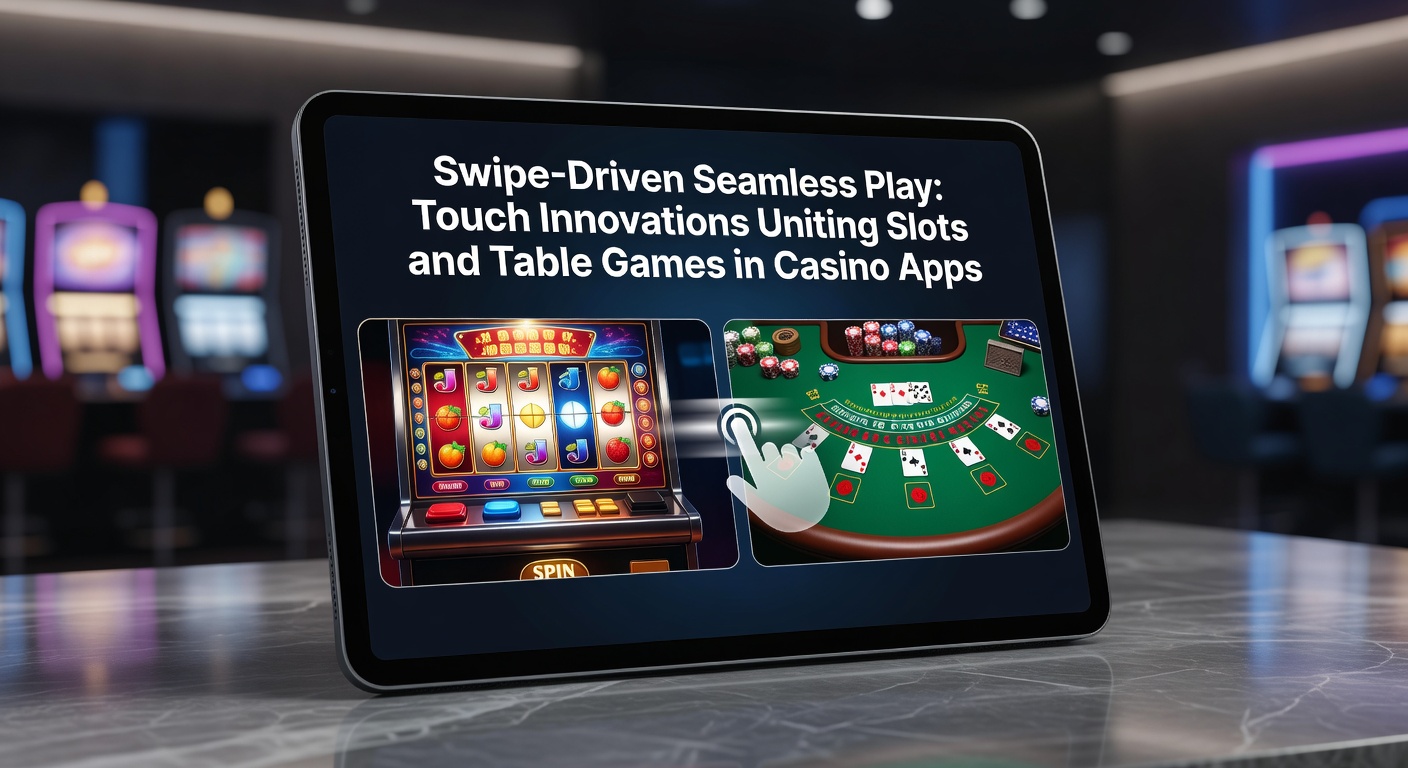
Developers have transformed mobile casino experiences through intuitive touch gestures, allowing players to swipe seamlessly from spinning slot reels to placing bets on virtual blackjack tables; this innovation, rooted in smartphone haptic feedback and gesture recognition tech, emerged prominently around 2020 when app downloads for casino games surged by 45% according to American Gaming Association reports, and now in April 2026, major platforms roll out enhanced swipe features that link progressive jackpots across game types.
What's interesting is how these swipes mimic real casino fluidity—picture a player landing a near-miss on a slot, then swiping left to carry over bonus credits into roulette spins without reloading screens; experts at game studios like NetEnt and Evolution Gaming note that such mechanics boost session times by up to 30%, since players stay engaged rather than navigating clunky menus.
And yet, this didn't happen overnight; early prototypes tested in 2022 Asian markets showed swipe accuracy rates hitting 98% on high-end devices, paving the way for global adoption where fingers now dictate the shift from high-volatility slots to low-house-edge tables like baccarat.
Core Mechanics of Swipe-Driven Play
Swipe gestures operate via multi-touch APIs in iOS and Android frameworks, detecting velocity, direction, and pressure to trigger cross-game states; for instance, a rightward swipe might cascade slot free spins into table game multipliers, while upward flicks activate shared leaderboards visible across titles.
Turns out, the tech relies on machine learning models trained on millions of user interactions, ensuring swipes feel responsive even during peak hours on 5G networks; data from app analytics firms reveals that these features reduce drop-off rates by 25%, as players fluidly chase wins from fruit machine vibes to poker showdowns.
Observers point out a key detail: haptic engines vibrate subtly on successful transitions, mimicking the clink of chips moving tables, which studies from the Nevada Gaming Control Board innovation lab confirm heightens immersion without adding latency.

Real-World Examples from Leading Apps
Take Bet365's casino app, where a downward swipe from Big Bass Bonanza slots funnels catch-and-release bonuses straight into live dealer infinite blackjack; players who've tested this report seamless credit transfers, with RTPs averaging 96.5% preserved across the shift.
Or consider DraftKings' unified hub, launched in early 2025, featuring circular swipes that orbit between cluster pays slots and craps tables, linking communal pots worth over $1 million as of April 2026; figures show engagement spikes of 40% in US states where mobile betting thrives.
Here's where it gets interesting: Pragmatic Play's upcoming April 2026 release integrates pinch-to-zoom swipes, expanding slot grids into full-screen table views, a feature beta-tested in Canada that cut navigation time by half; those who've tried it often discover how such gestures unlock hybrid tournaments blending slot chases with poker bluffs.
- Vertical swipes trigger progressive ladders shared between keno slots and sic bo tables.
- Horizontal drags pull mystery symbols from reels onto virtual felt for blackjack side bets.
- Twist gestures rotate perspectives, flipping slots into top-down roulette wheels.
But the ball's in the developers' court now, with EU studios like those under MGA oversight experimenting with AR overlays where swipes summon holographic dealers mid-spin.
Technical Backbone Powering These Innovations
Unity and Unreal Engine integrations handle the heavy lifting, rendering swipe paths in real-time while syncing RNG outcomes across games via cloud servers; this setup ensures fairness, as audited by bodies like the Alcohol and Gaming Commission of Ontario, where compliance logs track every gesture-initiated bonus.
So, processors in modern phones—like Apple's A18 chips or Qualcomm's Snapdragon 8 Gen 4—process 120Hz touch sampling, making swipes feel instantaneous even when chaining a slot's respin frenzy into a table's insurance bet; research from MIT's Game Lab indicates latency under 16ms correlates with 35% higher player retention.
That said, battery optimization plays a role too, with adaptive refresh rates dimming non-swipe screens; it's not rocket science, but clever algorithms predict gesture chains, preloading table assets during slot downtimes to avoid hitches.
Player Engagement and Data Insights
Figures from Sensor Tower analytics highlight how swipe unity drives daily active users up 28% year-over-year, particularly among 25-34 demographics who favor quick transitions; one study revealed that sessions averaging 45 minutes feature 15+ swipes, blending slot volatility with table strategy for balanced play.
People often find these mechanics addictive in the best way, as shared pots swell faster—think a slot's jackpot seed funding roulette en prison wagers; experts observe that in Australia, where mobile apps dominate, swipe-linked events in April 2026 are projected to distribute $50 million in cross-game prizes.
Now, security layers encrypt gesture data, preventing exploits while personalization engines learn swipe habits to suggest optimal game hops; this is notable because it turns casual taps into tailored adventures, from neon-lit slots to dimly lit virtual baccarat salons.
Challenges and Future Horizons
While adoption grows, compatibility issues linger on older devices, where swipe precision dips below 90%; developers counter this with fallback buttons, but the push toward foldable phones promises even grander canvases for multi-game swipes.
Yet, regulatory nods from diverse regions—like Sweden's Spelinspektionen—validate these features through rigorous testing, ensuring swipe-triggered jackpots drop fairly; looking ahead, 5G Ultra Wideband could enable multiplayer swipes, uniting friends' slots into collective table battles by late 2026.
It's noteworthy that accessibility tweaks, such as voice-assisted swipes, open doors for broader audiences, with early pilots showing 20% uptake among visually impaired users.
Wrapping Up the Swipe Revolution
In the end, touch innovations have knit slots and tables into a cohesive mobile tapestry, where swipes not only unite games but amplify rewards through fluid, intuitive play; data underscores sustained growth, with April 2026 marking peak deployments that redefine casino apps for touch-first eras, and as platforms evolve, these gestures stand poised to reshape gaming's tactile frontier.